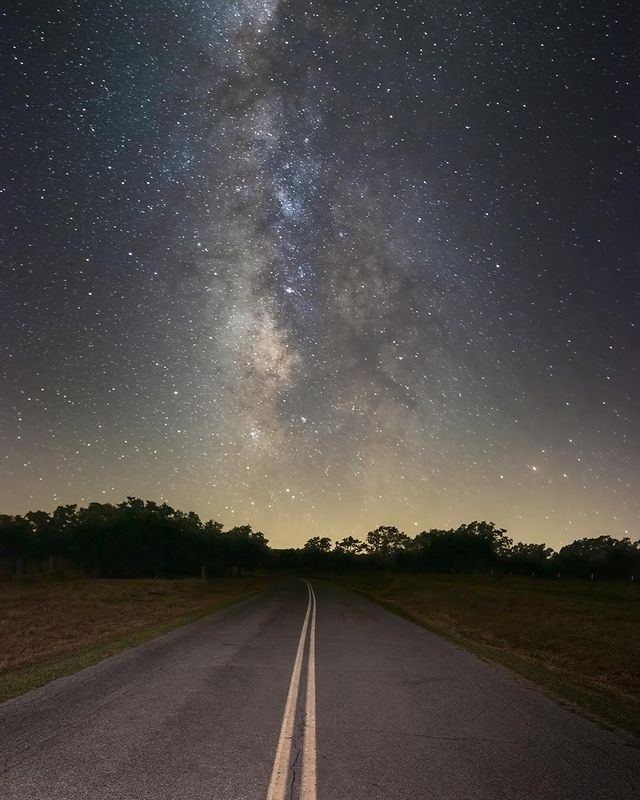
Far from city lights, Osage County has some of the best dark skies in the southern plains. Here's where to go and what to bring for a night under the stars.
Most Americans have never seen a truly dark sky. Light pollution has taken the Milky Way away from roughly 80% of the country. But Osage County, with its miles of open prairie and small towns, still has genuinely dark skies — and on a clear moonless night, the stars here are overwhelming.
Why Osage County's Skies Are Dark
Osage County is one of the largest, least densely populated counties in Oklahoma. Much of the land is ranching and the Tallgrass Prairie Preserve — meaning no city glow, no highway lights, no industrial haze. On a dark-moon night, you can see thousands of stars, the full band of the Milky Way, and even a few deep-sky objects with the naked eye.
Best Spots for Stargazing
The Tallgrass Prairie Preserve — The flagship dark-sky location. Drive in on a clear moonless night, park safely off the road, and look up. (Note: the preserve officially closes at sunset, so stargaze from the roads or overlooks just outside the boundary.)
Rural roads west of [Pawhuska](/destinations/pawhuska) — Drive 5-10 minutes west on any county road and you'll be in full dark sky territory. Pull well off the road, kill your headlights, and wait for your eyes to adjust (about 20 minutes).
Near [Wynona](/destinations/wynona) — This small town sits well away from any significant light source. Drive a mile or two out of town and you've got some of the darkest skies in the state.
Osage Hills State Park — If you're camping, this is your easiest option. The park has elevated points with good horizon views.
When to Go
Best conditions: New moon, clear sky, low humidity.
Best months: October through April. Summer skies are darker longer (later sunset), but summer haze reduces clarity.
Best time: 1-2 hours after full dark. Your eyes need 20-30 minutes to adjust.
Avoid: Full moon nights, humid nights, and evenings with nearby storms.
What to Bring
- A red-light flashlight (preserves night vision) - Warm layers (even summer evenings get cold in the open) - A blanket or reclining lawn chair (your neck will thank you) - Binoculars (transform the experience) - A thermos of coffee or hot chocolate - The Sky Guide or Stellarium app (free versions work) - Bug spray for spring/summer
What You'll See
On a dark-moon night:
- The Milky Way — Visible as a hazy band from horizon to horizon - Planets — Venus, Jupiter, Saturn often bright and naked-eye - Andromeda Galaxy — A smudge to the naked eye, a full galaxy in binoculars - Meteor showers — The Perseids (August) and Geminids (December) are especially good here - Satellites — Dozens per hour, moving steadily across the sky - The International Space Station — If timing is right, it's brighter than any star
Etiquette
- Respect private property. Don't park in ranch gates or drives. - Keep lights low and red-filtered if possible. - Take trash home. Leave no trace. - Share the sky. Stargazing with strangers is one of life's small pleasures.
Make It a Weekend
A stargazing trip pairs beautifully with a prairie morning. Spend the day at the Tallgrass Prairie, dinner in Pawhuska, then head out after dark for the stars. See where to stay for lodging ideas.